What BoatDeck does
Six screens, and the reasoning behind each one. Everything here is in the app today unless it says otherwise.
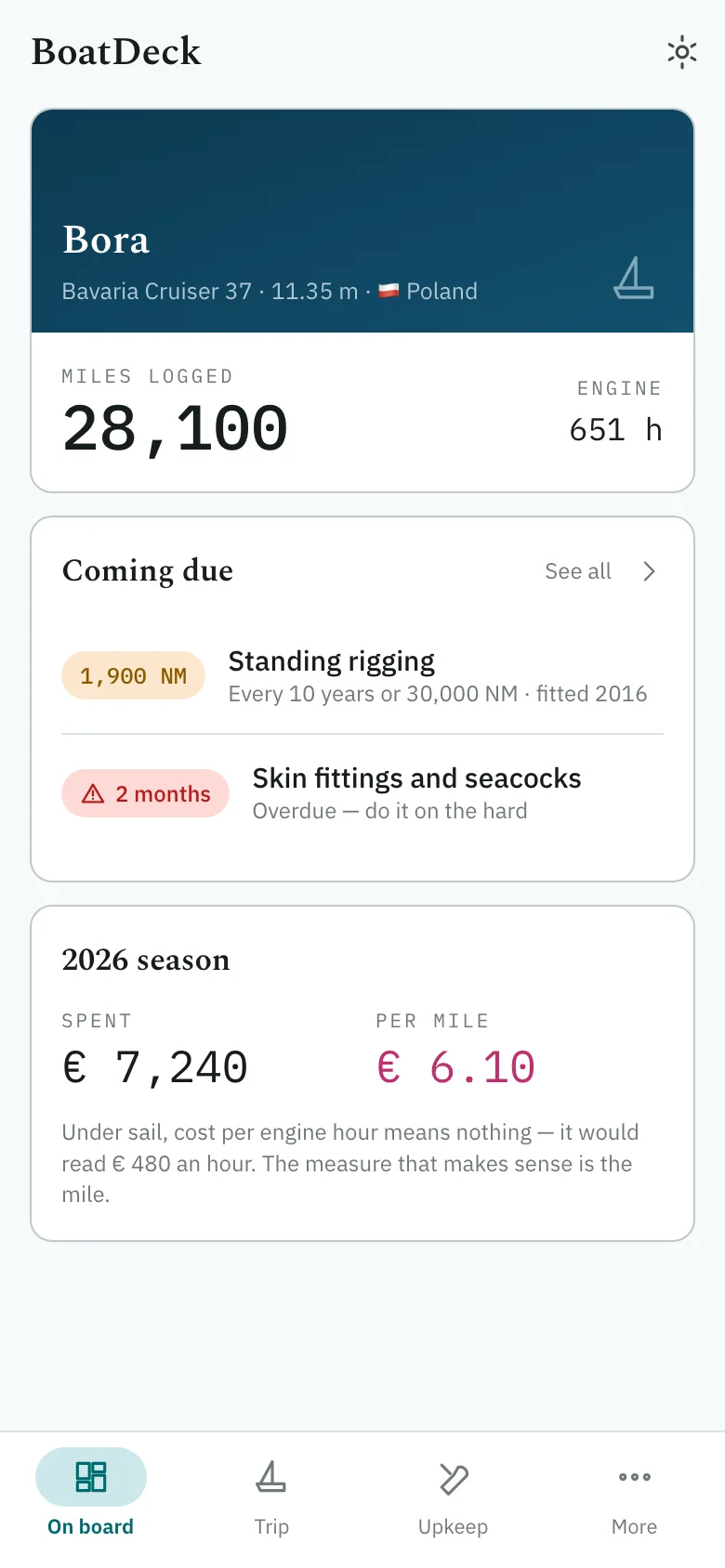
On board
Everything you would want to know standing on the pontoon, in one screen: miles logged, engine hours, what falls due next and what the season has cost so far. A sailboat gets miles first because that is the number that means something under sail.
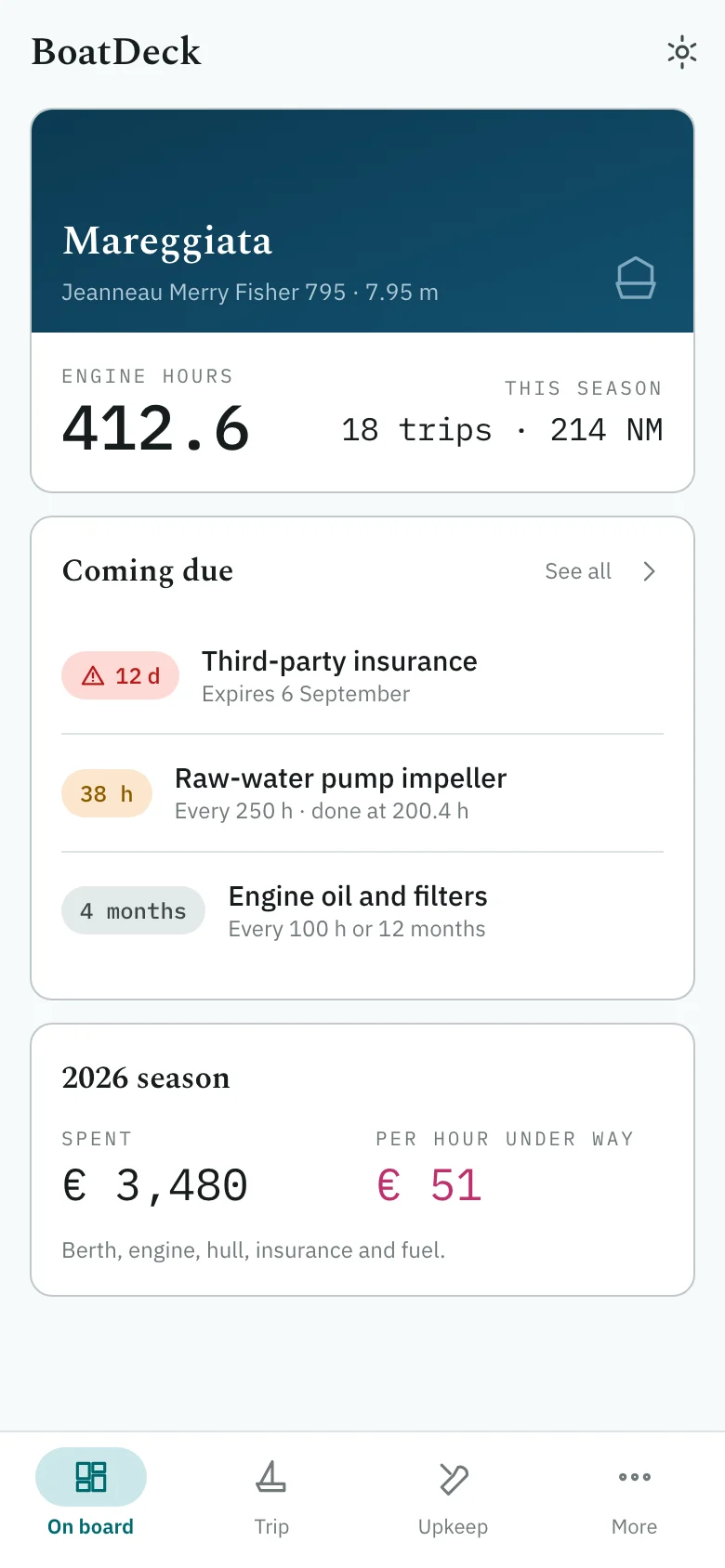
The same, on a motorboat
Engine hours take the lead and cost is expressed per hour under way. The layout is the same; the numbers that matter are not. This is what the fork at setup actually buys you.
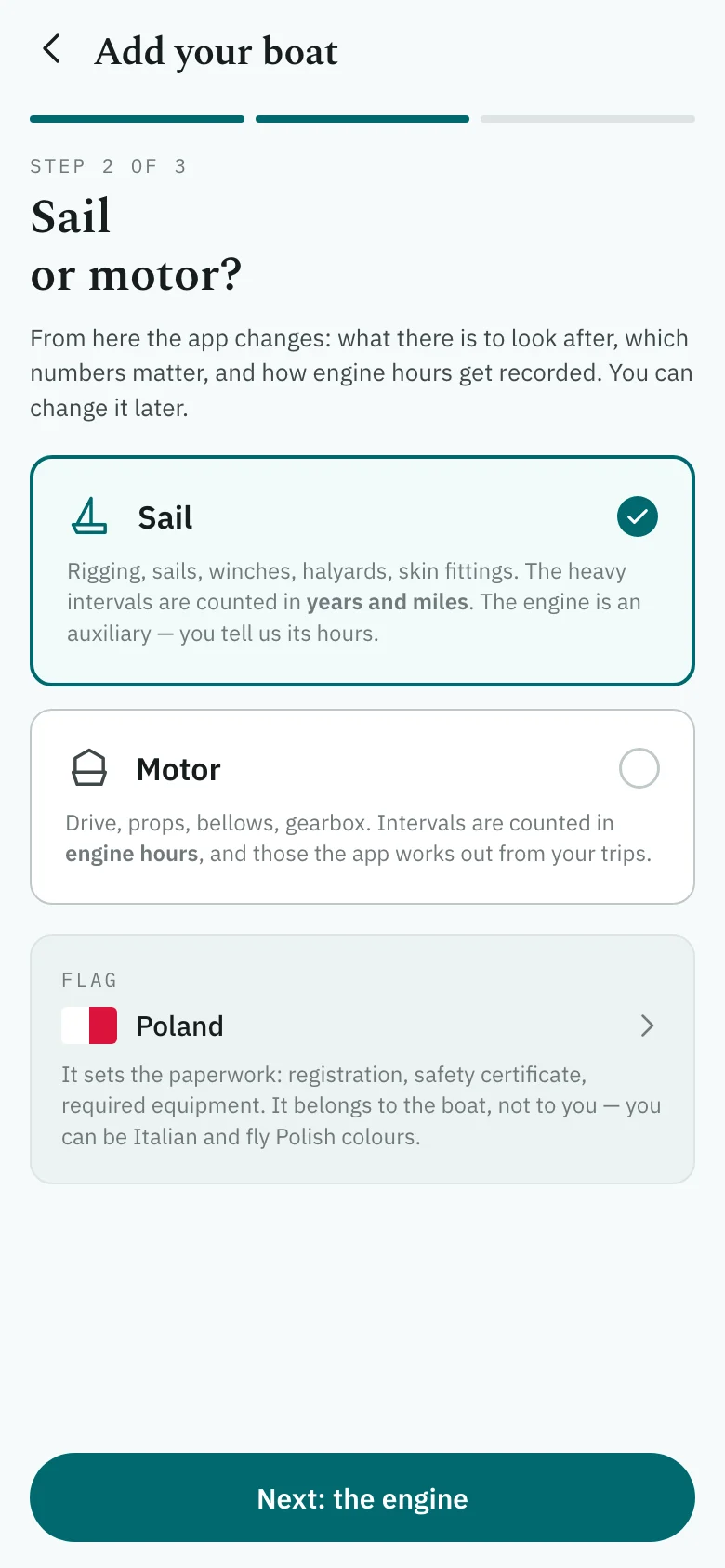
Three steps and no questionnaire
Name, sail or motor, flag, engine. That is the whole of it. Everything else can be added later from the boat's sheet, when there is a reason to. The first screen of a management app is where people give up, so it asks for the minimum.
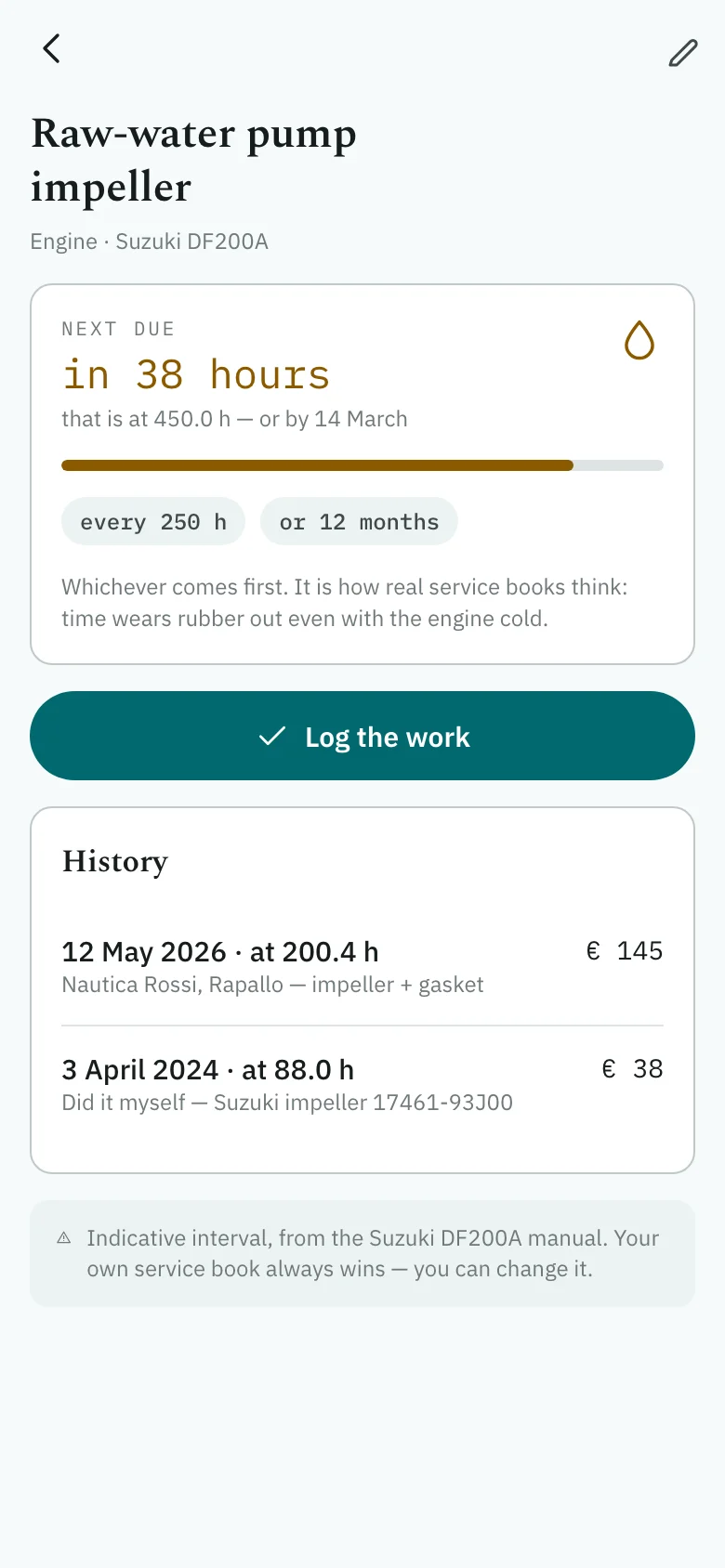
An interval that states its sources
Hours, months and nautical miles, whichever runs out first, plus where the number came from — and a reminder that your own service book always wins. You can change any interval. An app that hides where its figures come from is asking you to trust it blindly with an engine.
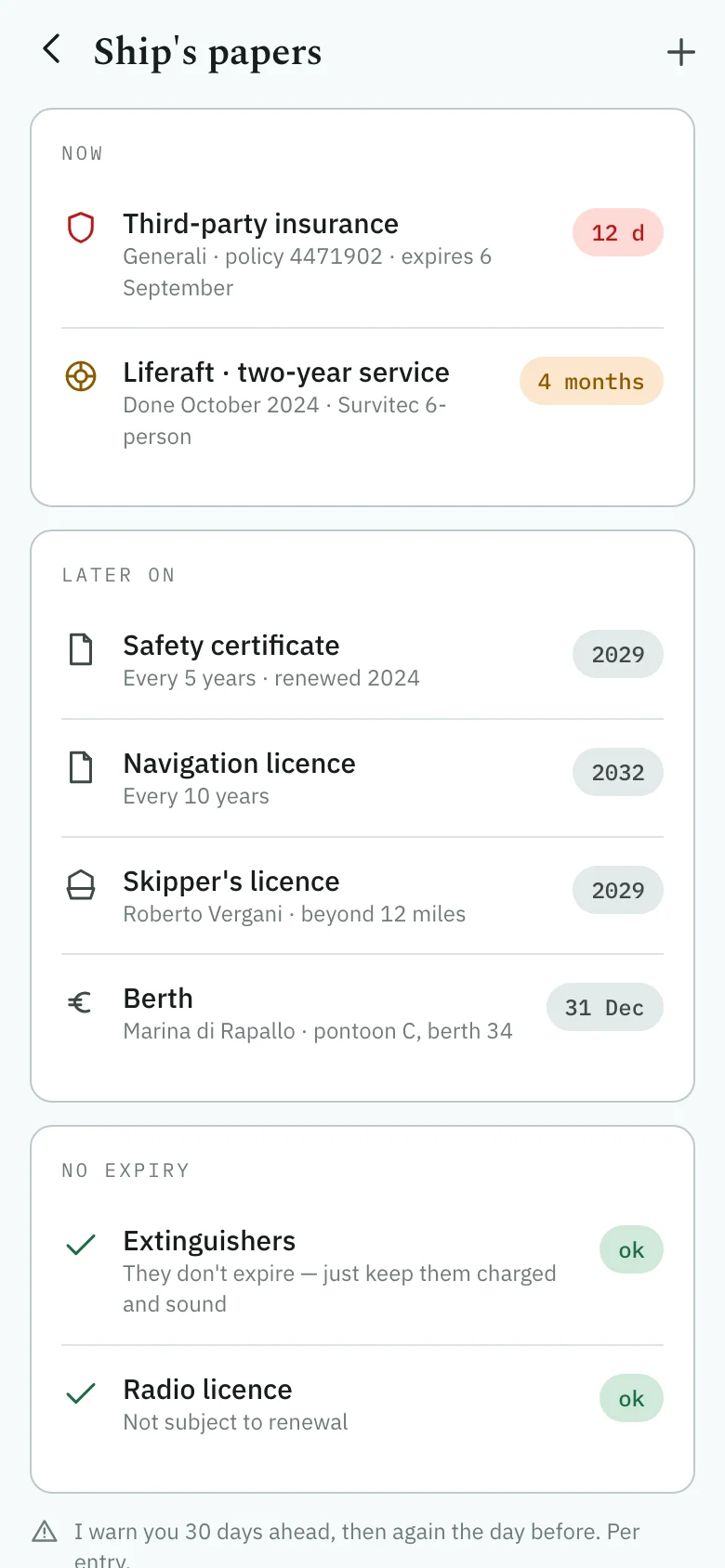
The papers, by flag
Insurance, safety certificate, liferaft service, licences, berth. The list comes from the boat's flag; the dates are yours, because the rule says how often and only you know since when.
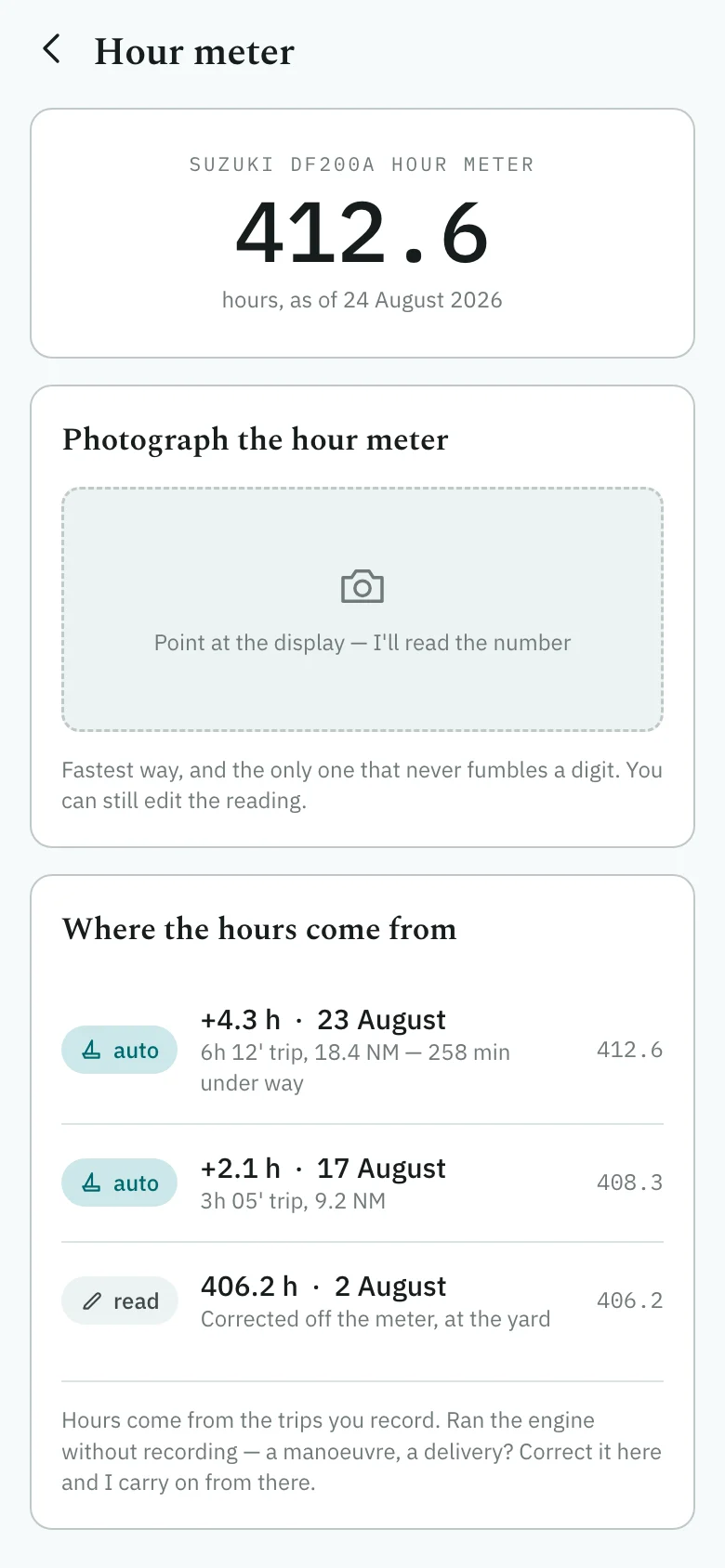
Where the hours come from
Every trip you record adds the minutes the engine ran. Ran it without recording — a manoeuvre, a delivery? Correct the reading and it carries on from there. Reading it off a photograph of the meter is being built now.
Screens from the design. Costs and documents are still being built — everything else is in the app today.